


Semiconductor equipment stocks sit at the crossroads of technology cycles and capital markets. Their revenues are tied to wafer‑fab and packaging investments, yet their valuations reflect investors’ expectations about future demand, competitive positioning, and macro risk. One of the most important lenses for understanding these stocks is the relationship between order visibility—how far into the future companies can see and quantify demand—and the valuations assigned to them.
Read Now
Semiconductor stocks sit at the intersection of two moving targets: who is buying them, and what their cash flows are worth in a changing macro environment. In one quarter, large institutions dominate flows and free cash flow (FCF) yields look attractive versus bond yields. In another, retail flows surge, multiples expand, and FCF yields compress as rates rise. If you want to understand where you are in the cycle—not just price, but positioning and valuation—you need a framework that connects buyer scale and FCF yield to the macro levers of interest rates, exchange rates, credit, and commodities.
Read Now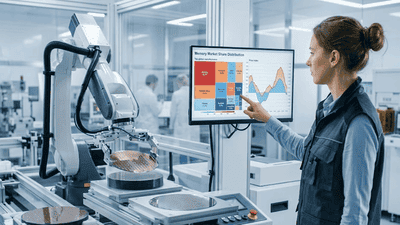
Pricing power in the memory sector does not move in a straight line. It ebbs and flows with cycles of demand, supply, consolidation, and technological transition. At the same time, the industry’s structure — who holds how much market share — is not static either. One of the most useful ways to capture this structure is the Herfindahl-Hirschman Index (HHI), a simple but powerful concentration metric that can reveal how much leverage the leading players have at any given moment.
Read Now
Most AI compute indicators and ETFs are built around the obvious heroes: GPUs, accelerators, and custom AI chips. Memory—the bandwidth and capacity that feed those chips—often shows up as a supporting cast with smaller index weights. That systematic underweighting of memory in AI compute indicators is understandable from a market-cap and narrative perspective, but it is increasingly at odds with how AI infrastructure actually works. If memory is a bottleneck, underweighting it is not just a technical quirk; it is a structural allocation error.
Read Now

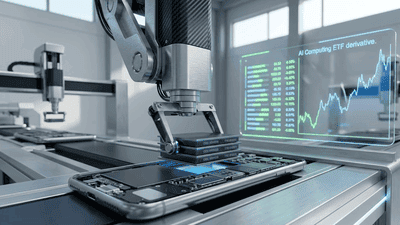

Massive AI chips—large, power‑hungry accelerators packed with billions of transistors and complex interconnect fabrics—have rapidly become central to data centers, cloud platforms, and high‑performance computing systems. Their front‑end design and fabrication attract much attention, but back end test is just as critical. Probing and handling these devices at wafer sort and final test is significantly more challenging than for traditional logic or consumer chips, because AI devices push the limits of size, power, thermal behavior, and interface complexity.
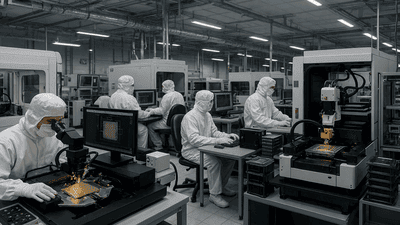
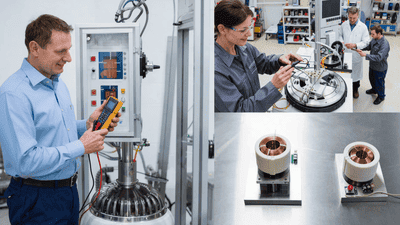
As semiconductor manufacturing becomes more strategically important and supply chains more scrutinized, attention is shifting from headline tools—like lithography scanners and etchers—to the critical parts inside these systems. Among the most important of these parts are ceramic heaters and electrostatic chucks, which play central roles in thermal management and wafer handling in front‑end processes. Their localization, meaning the development and production of these parts within domestic or regional ecosystems rather than relying entirely on imports, is now a key topic for both equipment vendors and fabs.

The 2026 global semiconductor equipment market sits at the intersection of multiple, sometimes conflicting forces: post-downturn recovery, structural demand from AI and automotive, technology transitions at advanced nodes, and ongoing geopolitical constraints. Institutions that track and forecast this market—industry associations, research houses, banks, and policy bodies—do not agree on a single trajectory. Instead, their forecasts diverge along several axes: size of the rebound from recent softness, sustainability of capital expenditure cycles, and the regional composition of spending.
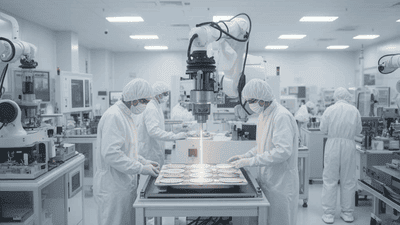
Silicon carbide (SiC) has become one of the most important wide bandgap semiconductors for next‑generation power electronics, thanks to its ability to handle high voltages, high temperatures, and fast switching with relatively low losses. As SiC devices move deeper into electric vehicles, renewable energy systems, industrial drives, and data center power supplies, process technologies around SiC must evolve to unlock the full potential of the material. High energy ion implantation is one of those enabling technologies, and its role is expanding beyond conventional doping to a wider range of applications within SiC power devices.
Semiconductor equipment stocks sit at the crossroads of technology cycles and capital markets. Their revenues are tied to wafer‑fab and packaging investments, yet their valuations reflect investors’ expectations about future demand, competitive positioning, and macro risk. One of the most important lenses for understanding these stocks is the relationship between order visibility—how far into the future companies can see and quantify demand—and the valuations assigned to them.