Photoresist sits at the heart of semiconductor manufacturing. As a key material in lithography, it directly shapes how patterns are transferred onto wafers and, ultimately, how advanced devices are made. In recent years, China has emerged as one of the most important semiconductor markets, both as a manufacturing base and as a consumer of critical materials like photoresist. Against this backdrop, a wave of price hikes by major suppliers—and evolving strategy from global leaders such as Shin Etsu and JSR—has become a focal point for fabs, policymakers, and industry observers trying to understand the changing economics of chipmaking in China.

This blog post examines the dynamics behind photoresist price hike waves, focusing on how leading suppliers are adjusting their strategies in China. It looks at the fundamentals of photoresist demand, the pressures on supplier cost structures, the motivations for price increases, and the broader implications for Chinese fabs and the global semiconductor supply chain.
Photoresist’s critical role in semiconductor manufacturing
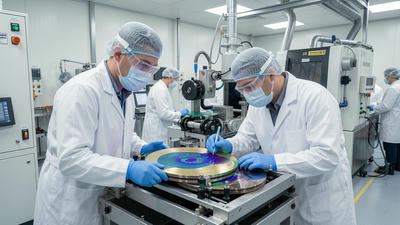
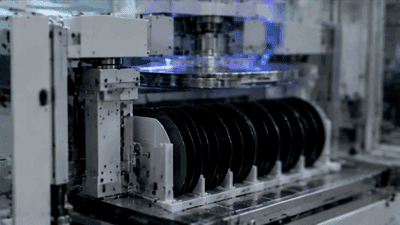
In modern fabs, photoresist is used in almost every lithography step. It is applied as a thin film on the wafer, exposed through a mask, and developed to create patterns that guide subsequent etch and deposition processes. Different resist formulations are tailored for deep ultraviolet (DUV), extreme ultraviolet (EUV), and various resolution and line edge roughness requirements.
Because photoresist directly influences critical dimension control, overlay, defectivity, and yield, fabs treat it as a strategic material rather than a generic consumable. Changing photoresist suppliers or formulations requires careful qualification and can affect device performance and reliability. As China ramps up both mature and advanced nodes, stable and high-quality photoresist supply becomes central to its semiconductor ambitions.
This strategic importance makes any shift in photoresist pricing or supply strategy highly consequential for Chinese manufacturing lines.
Why price hike waves are appearing now
Price hike waves in photoresist do not appear in isolation. They usually reflect a combination of factors: rising input costs for key raw materials and solvents, environmental and regulatory compliance expenses, investments in new formulations for advanced nodes, and the need to maintain specialized production capacity under tight quality controls.
Global supply chain disruptions—whether from logistics strains, energy price fluctuations, or broader macroeconomic conditions—can add further cost pressure. At the same time, demand for high-performance photoresist tends to rise as more fabs transition to finer geometries and more complex patterning flows. When these forces converge, suppliers may move from incremental price adjustments to more pronounced hike waves, especially in markets where pricing had been relatively compressed.
China, with its growing lithography footprint and aggressive capacity expansion, is naturally exposed to these developments.
China as a strategic photoresist market
China’s semiconductor industry spans mature-node production—such as automotive, power, and industrial devices—as well as efforts to advance logic and memory nodes. Across this spectrum, Chinese fabs consume large volumes of DUV photoresist for KrF and ArF exposure tools, alongside niche resists for specialty applications. As domestic lithography capacity grows, so does the need for dependable photoresist supply.
From the perspective of global suppliers, China represents both an opportunity and a risk. It offers volume growth and long-term demand, but it also presents competitive and regulatory complexity, including local content initiatives, environmental rules, and evolving trade policies. Strategy shifts by major photoresist makers therefore often focus specifically on how to balance these factors in the Chinese market.
Price hikes, product mix adjustments, and localization moves are all part of this strategic balancing act.
Supplier economics: costs, investments, and margins
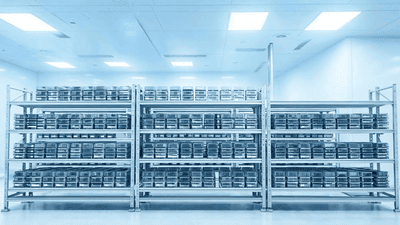
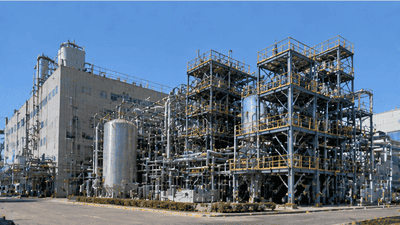
Photoresist production is capital- and knowledge-intensive. Suppliers must maintain clean, controlled manufacturing environments, invest in R&D for new chemistries and resists, and continuously fine-tune formulations to meet the needs of different lithography tools and process flows. Quality requirements are strict; small variations can affect line edge roughness, defectivity, and pattern fidelity.
At the same time, margins can be pressured by competition and customer expectations. When input costs rise—whether for advanced monomers, solvents, photoactive compounds, or the specialized equipment used in resist production—suppliers may face a choice between absorbing the impact or passing some of it on via price increases. Investments in next-generation resists for advanced nodes also need to be recouped over time.
In a market like China, where volumes are large, pricing decisions have outsized impact on overall supplier economics.
Drivers behind price hikes in China
In the Chinese context, several specific drivers can amplify general cost pressures. Localization efforts may require suppliers to build or expand local production or blending capacity, incurring capital costs and operational expenses. Compliance with environmental regulations and industrial safety standards can add further overhead, particularly in chemical manufacturing.
Suppliers may also adjust prices to reflect perceived risk and volatility in the regional market, including currency movements or policy shifts. In periods of strong demand, especially when advanced lithography capacity is tight, pricing may be used to balance order books and prioritize certain customers or product lines.
Together, these factors contribute to wave-like patterns in price hikes rather than isolated, minor adjustments.
Strategy shifts: moving beyond simple pricing
Major suppliers do not rely on price changes alone. Strategy shifts often encompass product portfolio decisions, service models, and localization footprints. For example, a supplier might emphasize higher-margin, technically differentiated resists for advanced nodes while gradually repositioning more commoditized products. It may offer bundled technical support, on-site process tuning assistance, or joint development programs with key fabs.
Suppliers also re-evaluate their supply chains: where they source raw materials, where they blend or finalize products, and how they distribute resists to Chinese fabs. These decisions can be aimed at improving responsiveness, reducing logistics risk, or aligning better with local regulations.
Price hikes thus frequently sit within broader strategy shifts around how the supplier positions itself in China’s evolving semiconductor ecosystem.
Impact on Chinese fabs’ cost structures
For Chinese fabs, photoresist price increases feed directly into process cost structures. Lithography already ranks among the most expensive modules in chip production due to tool costs and process complexity. When resist prices rise, per-wafer cost calculations change, especially for layers that require multiple exposures or complex patterning flows.
At mature nodes, increased resist costs may squeeze margins on price-sensitive products. At advanced nodes, where resist performance is tightly coupled to yield and device characteristics, fabs may be more reluctant to change suppliers purely to cut costs, accepting higher prices as the trade-off for stability and quality.
In both cases, fabs must re-evaluate their cost optimization strategies, including recipe tuning, resist usage efficiency, and potential process simplifications.
Qualification barriers: why switching suppliers is not trivial
In theory, fabs could respond to price hikes by switching to alternative photoresist suppliers, including domestic ones. In practice, qualification barriers make rapid change difficult. Any new resist must be tested for pattern fidelity, line edge roughness, defectivity, etch resistance, and compatibility with existing lithography tools and processes.
These tests are time-consuming and risk disrupting production if not carefully managed. At advanced nodes, where margins for error are small, changeovers can be particularly challenging. As a result, even when prices rise, fabs may prefer to negotiate or adjust usage rather than immediately substitute resists.
This qualification friction gives incumbent suppliers leverage, but it also creates openings for new entrants who can demonstrate strong performance in targeted niches.
Domestic photoresist development and competitive pressure
Price hike waves from established global suppliers can stimulate interest in domestic photoresist development. Local companies may position themselves as cost-effective or strategically aligned alternatives, particularly for mature-node lithography or specific applications where performance requirements are less extreme than at the cutting edge.
Chinese policy initiatives often encourage growth of domestic materials industries, including photoresist. Support may take the form of funding, pilot projects, and collaboration with research institutes. Success in these areas can gradually increase competitive pressure on global suppliers and provide fabs with more options.
However, catching up in advanced-node resists remains technically demanding, so competition may initially focus on mature and mid-range nodes where barriers are lower.
Bundled offerings: resist plus process support
In response to both competitive and pricing pressures, major photoresist suppliers frequently emphasize bundled offerings rather than standalone product sales. These bundles can include technical support, process optimization, defect reduction programs, and training for lithography engineers.
By delivering value in the form of improved yield and reduced variability, suppliers seek to justify higher resist prices and deepen relationships with fabs. In China, where many fabs are rapidly improving capabilities and ramping new technology nodes, such support can be particularly attractive.
Price hikes are often easier to accept when customers perceive a net improvement in performance or a reduction in total cost of ownership across the lithography module.
Risk management: inventory, contracts, and hedging
Chinese fabs facing price hike waves must manage not only cost but also supply risk. Some adjust inventory strategies for critical resists, holding more stock to buffer against further price changes or short-term availability fluctuations. Others renegotiate contracts to lock in pricing for certain periods or volumes, trading flexibility for predictability.
Depending on the financial and regulatory environment, fabs may also explore hedging mechanisms against currency or raw material price movements that influence resist costs. These tools can smooth the impact of supplier price decisions over time, though they add complexity to procurement and financial planning.
Effective risk management becomes more important as photoresist pricing moves from stable, incremental adjustments to more pronounced waves.
Broader implications for equipment and process localization
Photoresist strategy shifts intersect with broader themes of equipment and process localization in China. Fabs seeking greater autonomy in lithography and patterning may prefer material suppliers that are aligned with domestic initiatives and willing to collaborate on localized process flows and recipes.
Price hikes from global suppliers can be interpreted either as an acceptable cost of accessing leading-edge materials or as a signal to accelerate localization efforts. The direction chosen depends on each fab’s product mix, technology roadmap, and risk appetite. In turn, photoresist strategies influence how lithography tools are selected and operated, reinforcing or undermining certain patterns of dependence.
Thus, the photoresist pricing and strategy landscape is not isolated; it feeds into wider debates about China’s long-term semiconductor manufacturing trajectory.
Long-term strategic considerations for suppliers
For major photoresist suppliers, strategy shifts in China must balance short-term pricing decisions with long-term market positioning. Aggressive price hikes might improve near-term margins but risk pushing customers toward alternative sources or accelerating domestic material development. More gradual adjustments may preserve relationships but limit returns in a cost-intensive business.
Suppliers must also consider how their actions in China align with overall global strategy. Consistency across regions matters, but local conditions can justify different models, such as more extensive on-the-ground support or tailored product lines. The ultimate goal is to maintain relevance and trust with Chinese fabs while managing financial and operational realities.
In this context, price hikes are not simply transactional; they are one element in a broader positioning exercise.
Conclusion: navigating the photoresist price and strategy landscape in China
The wave of photoresist supplier price hikes and associated strategy shifts by major players in China reflects deeper changes in semiconductor economics, supply chains, and localization efforts. Photoresist is both a critical technical material and a strategic lever in lithography, making its pricing and availability important beyond simple cost accounting.
For Chinese fabs, responding to these developments requires a combination of technical rigor, financial planning, and strategic foresight: evaluating trade-offs between cost and performance, managing qualification risks, engaging with both global and domestic suppliers, and aligning photoresist choices with long-term process and equipment strategies. For suppliers, China’s market remains both attractive and demanding, pushing them to refine not only their pricing but also their broader engagement models.
As the industry continues to evolve, the dynamics around photoresist in China will remain a revealing lens on how material suppliers and fabs negotiate value, risk, and strategic direction in a complex global semiconductor environment.