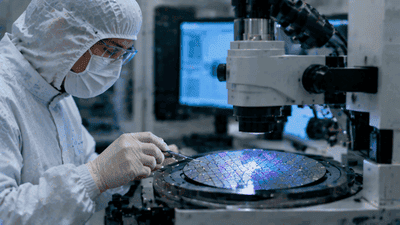
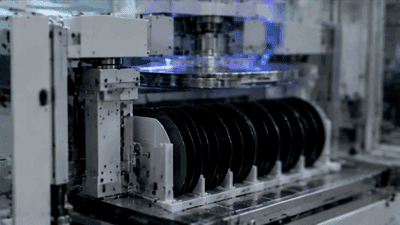
Chemical mechanical planarization (CMP) is one of the most critical yet often understated processes in semiconductor manufacturing. It quietly ensures that wafers maintain the flat, precisely controlled surfaces needed for successive lithography, etch, and deposition steps. At the center of CMP are two indispensable consumables: pads and slurries. Over the past decades, a small group of global players—most prominently DuPont and Cabot—have built strong positions around these products, developing what can fairly be described as “moats” in the CMP pad and slurry market structure.
This blog post explores how the CMP pad and slurry market is structured, why DuPont and Cabot enjoy durable advantages, what makes their moats difficult to cross, and how this affects fabs, competitors, and the broader semiconductor ecosystem.
CMP’s role in advanced semiconductor manufacturing
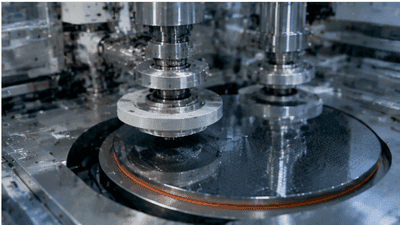
CMP combines chemical reactions and mechanical abrasion to remove material from wafer surfaces and achieve global and local planarity. It is used extensively in interconnect formation, shallow trench isolation, and various dielectric and metal levels, especially in multi-layer stacks at advanced nodes.
Without CMP, topography across a wafer would quickly accumulate, distorting lithography focus, compromising pattern fidelity, and ultimately degrading device performance and yield. CMP pads provide the mechanical interface with the wafer, while slurries deliver abrasive particles and reactive chemistries that control removal rates and selectivity.
Because CMP impacts defectivity, line profiles, and film thickness uniformity, its consumables become central to process control and device reliability.
What CMP pads and slurries actually do
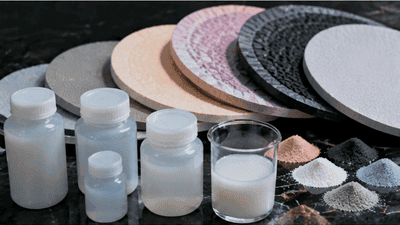
CMP pads are engineered polymer structures with specific hardness, porosity, groove designs, and surface textures. They must distribute slurry uniformly, maintain consistent contact with the wafer, and support stable friction and pressure conditions over many wafers.
Slurries are carefully formulated suspensions containing abrasive particles—such as silica or alumina—and chemical components that react with target materials like copper or dielectrics. They control removal rate, selectivity between different films, and defect generation. The interaction among pad, slurry, wafer material, and process conditions defines CMP performance.
This interdependence means pads and slurries cannot be treated as generic commodities; they are co-engineered elements of a tightly tuned process.
Concentrated market structure with high barriers
The CMP pad and slurry market is highly concentrated, with a few major global suppliers controlling a large share of advanced-node volume. DuPont and Cabot are among the best known, supported by long histories in materials science and deep technical engagement with leading fabs.
Barriers to entry are substantial. New entrants must not only develop high-performance formulations and pad designs, but also demonstrate consistent quality, reliability, and support across varied process conditions and tool sets. Qualification cycles in fabs are long and demanding, especially for advanced nodes where CMP directly influences critical dimensions and yields.
This combination of technical difficulty and long-term customer relationships shapes a market where incumbents have durable structural advantages.
Technology moats: materials science and formulation know-how
DuPont and Cabot have built substantial technology moats around materials science and formulation know-how. CMP pads require specialized polymer chemistries, pore and groove engineering, and surface finishing that balance durability with controlled wear and texture evolution. Slurries demand precise control over particle size distribution, stability, and interaction with specific metals or dielectrics.
Developing these products involves years of R&D, proprietary manufacturing methods, and extensive testing across different CMP tools and process modules. Knowledge about how small formulation changes affect performance is cumulative and often closely guarded.
New competitors can replicate broad concepts, but matching this depth of know-how, especially across the full range of CMP applications, is exceptionally challenging.
Integration with fab processes and tool ecosystems
CMP consumables are deeply integrated into fab processes and tool ecosystems. Pads and slurries must work in harmony with specific CMP equipment—platen designs, pad conditioners, slurry delivery systems, and in-situ metrology. They must also fit into broader process flows involving preceding and subsequent deposition, etch, and cleans.
DuPont and Cabot’s products are widely co-qualified with major CMP tool vendors, and their engineers often collaborate directly with fabs to tune recipes for particular nodes and product mixes. This integration becomes a moat: fabs rely on proven combinations of tools, pads, and slurries, and changing any element requires careful re-qualification.
New suppliers not only need competitive consumables, but also must demonstrate seamless integration into existing tool and process ecosystems—a high hurdle in high-volume manufacturing.
Qualification barriers and fab risk aversion
Replacing CMP pads or slurries is risky for fabs. Qualification involves running test lots, monitoring defectivity, thickness variations, dishing, erosion, and electrical performance across many wafers and lots. Any misstep can lead to yield loss or reliability issues, making fabs cautious about switching suppliers or products.
DuPont and Cabot benefit from incumbent status: their products are already extensively qualified, with known performance envelopes and established support models. Fabs may periodically evaluate alternatives, but the cost and risk of change often favor sticking with proven suppliers, especially for critical layers and nodes.
This risk aversion acts as a practical moat, reinforcing the position of existing pad and slurry vendors even when substitutes are technically available.
Product breadth and portfolio depth
Another moat lies in product breadth and portfolio depth. CMP applications now span multiple materials and layers: copper, tungsten, barrier metals, oxides, low-k dielectrics, and more. Each requires tailored pad and slurry combinations. DuPont and Cabot offer extensive portfolios covering these diverse needs, enabling fabs to source multiple CMP solutions from a single, trusted partner.
Wide portfolios simplify logistics, qualification management, and technical support. Pads and slurries can be co-optimized across different modules, reducing process fragmentation. Smaller suppliers often specialize in narrower niches, limiting their ability to serve as comprehensive partners for large fabs.
This broad coverage reinforces the incumbents’ roles as default choices in new CMP applications and node migrations.
Close customer relationships and field support
DuPont and Cabot, and similar leaders, maintain close relationships with top-tier fabs through extensive field support networks. Their engineers work on-site or in regular collaboration with fab process teams, helping troubleshoot issues, adjust recipes, and optimize performance for new products and nodes.
This level of engagement builds trust and institutional familiarity. When fabs face new CMP challenges—such as integrating a novel dielectric or metal—they often turn first to their established pad and slurry partners for co-development. The resulting solutions deepen the relationship and expand the incumbents’ footprint.
Such intimate customer ties are difficult for newcomers to replicate quickly, further strengthening incumbents’ moats.
Scale, manufacturing quality, and reliability
Manufacturing CMP pads and slurries at scale while maintaining tight quality control is demanding. Variations in polymer batches, particle properties, or trace impurities can lead to process instability or defects. DuPont and Cabot leverage large, mature production infrastructures with robust quality systems, enabling them to supply high volumes consistently.
Scale also supports investment in specialized equipment, advanced analytical tools, and continuous process improvement. Reliable supply reduces the risk of disruptions for fabs, which value predictability in consumables as much as performance.
Smaller or newer suppliers may struggle to combine cutting-edge formulation with large-scale, consistent manufacturing, limiting their ability to challenge established players in high-volume, advanced-node environments.
Economic characteristics: consumables with recurring revenue
CMP pads and slurries are consumables, not one-time capex items. As long as wafers are processed, fabs must continually purchase these materials. This recurring revenue structure provides DuPont and Cabot with stable, ongoing business tied directly to wafer throughput and process mix.
In industry upswings, CMP consumables demand rises with increased wafer starts and advanced-node adoption, amplifying revenue. In downturns, demand softens but does not disappear, particularly for maintenance of essential lines and long-term contracts. These dynamics make pad and slurry businesses attractive from a profitability and cash flow standpoint.
Recurring revenue, combined with strong moats, creates defensible economic positions that encourage continued investment and innovation by incumbents.
Competitive strategies and niches for challengers
Despite strong moats, there is room for challengers, particularly in specific niches. Some competitors focus on particular materials—for example, specialized slurries for certain low-k dielectrics or unique metal CMP applications. Others offer pads tailored for specific tool configurations or seek cost advantages in mature-node applications.
These strategies allow new or smaller players to gain footholds without directly confronting incumbents across the entire portfolio. Over time, successful niche suppliers may expand their offerings or form partnerships that broaden their market presence.
Nevertheless, breaking into the core advanced-node CMP pad and slurry segments where DuPont and Cabot are entrenched remains a formidable task.
Impact on fabs’ cost structure and process choices
The market structure and moats in CMP consumables influence fabs’ cost structures and process choices. CMP is already a costly module due to tool expense, consumable usage, and potential yield impact. Strong incumbent positions give DuPont and Cabot meaningful pricing power, especially in advanced-node products where alternatives are limited or less proven.
Fabs manage these costs by optimizing pad lifetimes, slurry usage efficiency, and process conditions to maximize value from consumables. They may also engage in multi-sourcing strategies for less critical CMP applications while relying on incumbent suppliers for key layers.
Overall, the presence of strong moats contributes to a relatively stable but not commoditized pricing environment for CMP pads and slurries.
Localization and regional strategies
As semiconductor manufacturing localization initiatives expand across various regions, CMP consumables become part of the discussion. Local fabs and governments may encourage domestic production of certain materials to reduce supply risk and support local industry. However, the high technical and qualification barriers in CMP pads and slurries complicate rapid localization.
DuPont and Cabot can respond by establishing regional manufacturing or blending facilities, partnering with local firms, or co-developing products tailored to regional fabs. These moves preserve their moats while aligning with localization trends.
Completely displacing global incumbents in advanced CMP consumables through purely local solutions is likely to be a gradual, long-term process rather than a rapid shift.
Innovation trajectories: next-generation CMP challenges
Future device architectures and materials continue to challenge CMP. New interconnect metals, barrier systems, and dielectrics require fresh pad and slurry designs. 3D stacking, advanced packaging, and heterogeneous integration introduce CMP needs beyond traditional front-end flows.
DuPont and Cabot’s moats position them to be key partners in tackling these challenges. Their R&D capabilities, customer access, and manufacturing infrastructures allow them to develop specialized solutions for emerging requirements. Successful innovations reinforce their market positions and extend their moats into new application domains.
For fabs, close collaboration with established CMP consumable suppliers will remain vital to integrating new technologies into reliable, high-yield processes.
Conclusion: CMP consumables moats as a quiet cornerstone of the ecosystem
The CMP pad and slurry market structure, and the strong moats built by DuPont and Cabot, illustrate how certain segments in semiconductors combine deep materials science, process integration, and long-standing customer relationships to create durable advantages. These consumables, though less visible than front-line equipment or chip designs, are essential to achieving the planarity, uniformity, and low defectivity required at advanced nodes.
For fabs, understanding and navigating these moats is part of managing cost, risk, and technology roadmaps. For competitors, they highlight the level of commitment and innovation required to play a meaningful role in CMP. As semiconductor manufacturing grows more complex, the quiet strength of these CMP consumable positions will remain a cornerstone of the industry’s ability to deliver ever more sophisticated devices.